Exchange Security Checklist: What to Look For Before You Sign Up

Most people pick their first crypto exchange based on bonuses, brand recognition, or an influencer recommendation. From a security point of view, that is upside down. A centralised exchange is effectively a bank that is not a bank – it holds your assets, controls withdrawal flows, and sits between you and the blockchain. If its controls fail, your coins are at risk, no matter how good your trading strategy is.
🎥 Watch our short video below which highlights what you should check before singing up to a Crypto Exchange.
This guide gives you a practical, opinionated security checklist to apply before you trust any exchange with real money. It is written from the perspective of someone who has spent years helping users understand operational risk, investigating incidents, and comparing how different platforms actually behave when things go wrong – not just what they claim in their marketing.
We will focus on what you can verify as an external user – security controls, withdrawal protections, solvency signals, and governance patterns that either reduce or amplify risk. We will also tie that back to real scoring data from our own testing of major exchanges, and show why some platforms score consistently higher than others.
The problem this checklist solves
Most traders have the wrong mental model for exchange risk. Common patterns include:
- Picking the exchange with the flashiest app or the largest bonus, rather than the strongest custody and withdrawal controls.
- Assuming that because an exchange has a big brand, it must be safe.
- Ignoring where the exchange is legally based, or what happens if you need to escalate a dispute.
- Only looking at trading fees, not hidden costs, liquidity slippage, or premium spreads that quietly drain P&L.
- Leaving large balances on an exchange long term, without any plan for cold storage or diversification.
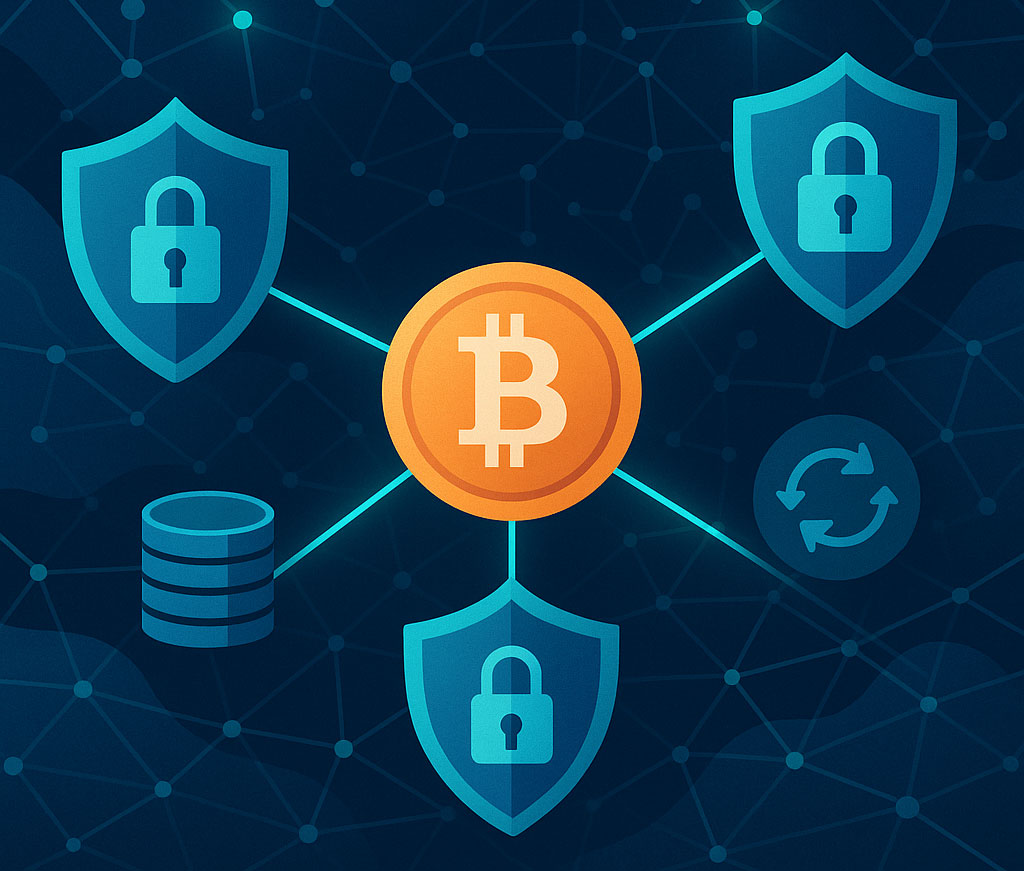
The result is predictable. Users discover after they have money on the platform that withdrawals are slow or heavily restricted, that the support team is overwhelmed, or that the exchange’s idea of “insurance” is far weaker than they assumed. In worst case scenarios, they only learn about structural weaknesses when headlines appear.
This checklist gives you a simple, structured way to invert that process. Instead of asking “Which exchange gives me the biggest signup bonus”, you ask “Which exchange has the strongest overall risk profile, and is that risk acceptable for my purposes”.
How to use this exchange security checklist
Before you create an account and move funds, walk through each of these pillars:
- Regulation, licensing, and jurisdiction
- Custody model and wallet architecture
- Proof of reserves, liabilities, and solvency signals
- Account security and anti take-over controls
- Withdrawal friction, limits, and monitoring
- Insurance, SAFU funds, and default scenarios
- Fee structure, incentives, and hidden costs
- Operational track record and transparency
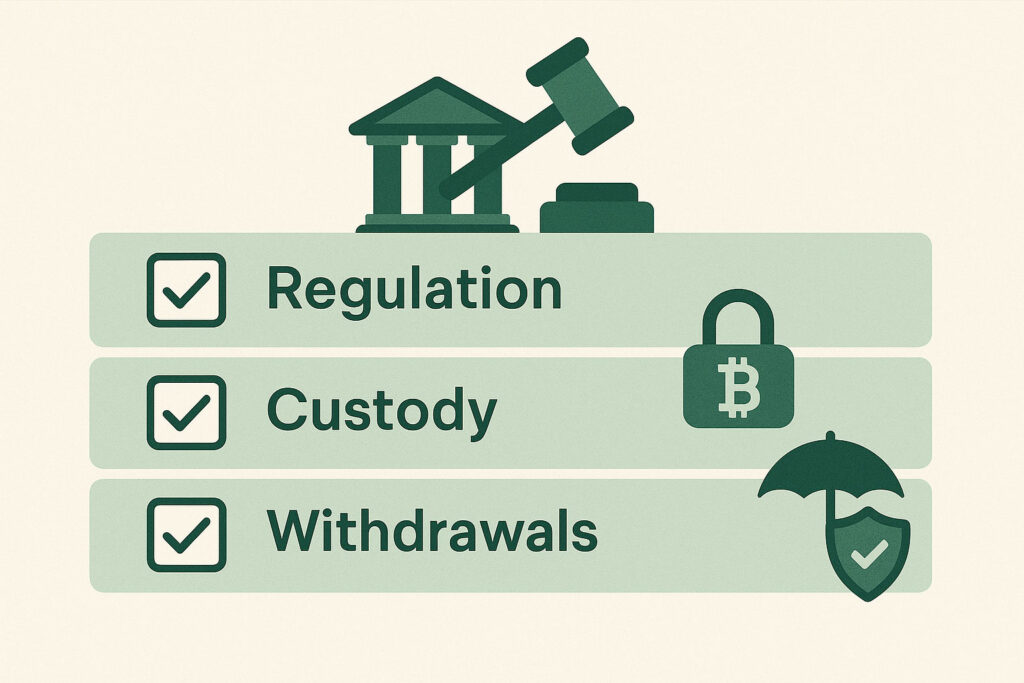
If an exchange fails badly on any one of these, you should either reduce the amount you are prepared to store there, or skip it entirely. There is no such thing as a “perfectly safe” centralised platform, but some are substantially better engineered and better governed than others.
What our testing says about leading exchanges
Before we dive into the checklist, it helps to frame the landscape with real scoring data. In our independent dataset of crypto exchanges, we evaluate platforms on fees, security, usability, features, support, and an overall score out of ten.
| Exchange | Overall score (/10) | Security (/10) | Fees (/10) | Usability (/10) | Best for |
|---|---|---|---|---|---|
| Kraken | 9.5 | 9.8 | 9.4 | 8.9 | Low total cost and strong trust for serious traders |
| Coinbase | 9.2 | 9.6 | 8.5 | 9.7 | Beginner friendly fiat on-ramps and clean UX |
| Crypto.com | 8.8 | 9.2 | 8.6 | 9.1 | Card perks and app ecosystem for active users |
Those scores map directly to lived user experience and our own in depth reviews. If you want a narrative comparison of how these three stack up on security assumptions, long term reliability, and user protections, you can compare our top three picks in detail.
Within that group, Kraken consistently sits at the top of our rankings for combined security, fees, and overall user protection. If you want a bigger picture view of how it compares to the wider market, including methodology, you can see why Kraken ranks no.1 of our tested exchanges.
Security
- Kraken: 9.8/10 – Security-first culture and architecture. A top score in our dataset.
- Coinbase: 9.6/10 – Heavily regulated, strong custody and operational controls.
- Crypto.com: 9.2/10 – Solid protection stack and controls.
Security
Usability
- Coinbase: 9.7/10 – Still the smoothest onboarding and day-to-day UX for newcomers.
- Crypto.com: 9.1/10 – Mobile UX stands out. Great for managing everything on the go.
- Kraken: 8.9/10 – Thoughtful design with power-user depth, slightly steeper learning than the others.
Usability
Support
- Kraken: 8.8/10 – Consistently above-average response and resolution quality.
- Coinbase: 8.8/10 – On par with Kraken.
- Crypto.com: 8.2/10 – Usable but not standout in our tests.
Support
Checklist pillar 1: Regulation, licensing, and jurisdiction
Regulation is not a magic shield, but it does change the game. A regulated entity is subject to audits, capital requirements, and enforcement actions if it misuses client funds. An unregulated offshore operation has far more freedom to take risks with your deposits, and far fewer consequences when things go wrong.
When assessing an exchange, look for:
- Clear regulatory status – Is the platform licensed as a money services business, virtual asset service provider, or similar in reputable jurisdictions.
- Segregation of client assets – Does the regulatory regime require client funds to be kept separate from operational funds.
- Audited financials – Are financial statements published, and are they signed off by known audit firms.
- Enforceable legal venue – If you need to sue or escalate, which court system are you effectively relying on.
Common pitfalls include:
- Assuming a single minor licence in a small jurisdiction offers the same protection as full oversight in a major market.
- Not noticing that you are technically contracting with an offshore subsidiary, rather than the brand’s regulated entity.
- Overestimating what “registration” actually means – there is a huge difference between simple registration and full prudential regulation.
Checklist pillar 2: Custody model and wallet architecture
Exchanges are fundamentally custodians. They aggregate user deposits into hot and cold wallets, manage keys, and route withdrawals. The safety of that architecture determines how exposed your funds are to both external attackers and internal abuse.
Questions to ask:
- Hot vs cold storage split – What percentage of funds are kept in offline cold wallets versus hot wallets connected to the internet.
- Key management – Are hardware security modules (HSMs) or multi party computation (MPC) used, or is the setup home grown.
- Withdrawal signing process – How many approvals are required to move large amounts out of cold storage.
- Segregated deposit addresses – Are user deposits mapped to unique addresses, or pooled entirely behind the scenes.
Red flags include:
- Vague marketing statements about “bank grade security” with no concrete information about key management.
- No mention of cold storage or multi signature policies at all.
- Evidence of repeated “maintenance” incidents that conveniently pause withdrawals on short notice.
In practice, you are looking for a conservative design: heavy use of cold wallets, strong internal approvals for large movements, and a minimal attack surface for hot wallets. Exchanges that chase efficiency and convenience at every layer usually pay for it in increased risk. If you’re thinking to also use a cold wallet, see out post here for more details on the top ranked hardware wallets.
Checklist pillar 3: Proof of reserves, liabilities, and solvency signals
Solvency risk is a subtle but critical part of exchange security. Even if the platform’s technical controls are strong, you are exposed if it quietly lends out user deposits or takes directional bets with customer funds.
Key items to check:
- Proof of reserves – Does the exchange publish independently verifiable reserve proofs for major assets, with clear instructions on how to verify that your own balances are included.
- Liabilities visibility – Do they disclose methodologies for proving liabilities, or are they only showing assets, which is much easier.
- Audit credibility – Are third party attestations performed by reputable firms, and do they explicitly cover customer assets held in custody.
- Leverage and lending – Does the platform run an internal lending book, margin products, or rehypothecation arrangements that could impact solvency.
There is no perfect metric here, but the combination of transparent reserve proofs, clear liabilities descriptions, and a conservative attitude to leverage should put an exchange in a different risk bucket to one that offers no verifiable data at all.
Checklist pillar 4: Account security and anti take-over controls
Even if an exchange has exemplary back end security, weak user level controls can still lead to catastrophic losses. Most real world incidents happen when an attacker compromises a user’s email, phone, or password and then pushes through a withdrawal before the user notices.
Strong exchanges offer layered protections such as:
- Hardware backed 2FA – Support for security keys and app based authenticators, rather than just SMS.
- Withdrawal allowlisting – The ability to restrict withdrawals to a set of pre approved addresses, with a cooldown period for any changes.
- Device and IP recognition – Alerts and friction when logins occur from new devices or unusual locations.
- Granular permissions – Separate API keys for trading and withdrawals, with fine grained scopes.
A good security posture also includes sensible defaults. For example, 2FA should be encouraged or required at account creation, not left as a hidden option. Address allowlisting should be easy to configure. High risk actions should have additional friction. If the platform feels reckless at the account level, you should assume that mindset might extend deeper into their systems.
Checklist pillar 5: Withdrawal friction, limits, and monitoring
Withdrawal controls are where theory meets practice. An exchange can talk about security all day, but what really matters is what happens if someone tries to move a large sum out of your account in one go.
Pay close attention to:
- Per transaction and daily limits – Are there sensible caps on withdrawals, and can you customise them.
- Cooldown periods – When you change security settings, addresses, or devices, is there a delay before large withdrawals are allowed.
- Manual reviews – For unusually large or suspicious transactions, does the exchange have a manual review process.
- Clear communication – Are withdrawal policies documented in detail, or only vaguely referenced in FAQs.
There is a balance here. Hyper aggressive withdrawal friction can be abused as an excuse to trap user funds, while zero friction makes account takeovers much more damaging. The goal is sensible, transparent friction driven by risk signals, not unpredictable delays. To understand the patterns and red flags in more depth, especially around balance freezes and delays, it is worth reading up on withdrawal risks from exchanges before you choose where to store large balances.
Checklist pillar 6: Insurance, SAFU funds, and default scenarios
Many exchanges mention “insurance”, “protection funds”, or “SAFU” style reserves in their marketing. The problem is that users often assume these are equivalent to formal deposit insurance. In reality, they are usually discretionary protection pools controlled by the exchange itself.
When you see bold claims about insurance, ask:
- What is actually insured – Hot wallets, cold wallets, or only specific asset types.
- Who is the insurer – A third party insurance company, or an internal fund controlled by the exchange.
- What events are covered – External hacks, employee theft, insolvency, or just very narrow incidents.
- What limits apply – Per user caps, aggregate caps, and exclusions.
It is essential to understand what safu really covers in practical terms. In many cases, these funds are best viewed as a goodwill buffer that may help in some incidents, not a guaranteed backstop for all potential losses. The safest posture is to assume that no exchange level insurance will fully protect you from a complete platform failure, and to size your exposure accordingly.
Checklist pillar 7: Fee structure, incentives, and hidden costs
At first glance, fees might not look like a security topic. In practice, they drive behaviour. If a platform’s incentives are heavily skewed towards aggressive leverage, high volume gambling, or opaque “earn” products, that tells you a lot about the risk culture.
Consider:
- Transparent taker and maker fees – Are spot and derivatives fees clearly published, with consistent tiering.
- Spread and slippage – On fiat pairs and low cap coins, are you paying an invisible premium on each trade.
- Funding and borrow costs – If you trade on margin or perps, how expensive is the effective leverage.
- Non trading fees – Deposit, withdrawal, and conversion fees can quietly eat into returns.
Kraken, for example, scores strongly in our dataset on both security and cost efficiency, which is why in our deeper analysis of fees for trading on Kraken we pay a lot of attention to real effective costs, not just headline rates.
Hidden fees are a separate risk class. An exchange that plays games with spreads, conversions, or “convenience” features is signalling that user interests come second to short term revenue. To protect yourself from these patterns, it helps to understand how to spot hidden fees on exchanges before you scale up your trading size.
Checklist pillar 8: Operational track record and transparency
Security is not just about cryptography or infrastructure. It is about culture. Some exchanges demonstrate a long history of conservative risk management, transparent communication, and continuous improvement. Others show a pattern of aggressive promotions, rushed feature rollouts, and evasive responses when issues arise.
Signals to look for:
- Incident disclosure – When there have been security incidents or outages, did the exchange communicate quickly and honestly, or try to bury the story.
- Bug bounty programmes – Are external researchers actively encouraged to probe systems and report issues.
- Leadership background – Are founders and executives known in the industry, with verifiable experience in finance, security, or engineering.
- Long term feature set – Has the platform grown steadily, or pivoted wildly from one high risk trend to another.
This is where in depth reviews become useful. For instance, if you are considering using Kraken as a primary exchange, our dedicated is kraken a safe exchange analysis walks through its regulatory posture, security architecture, and historical behaviour in detail.
From there, you can drill further into our full review of Kraken exchange, or contrast it with our review of coinbase exchange and our check out our crypto.com review. Combined with our numerical scores, these qualitative assessments give you a rounded picture of each platform’s operational reality.
Putting it together: practical security profiles
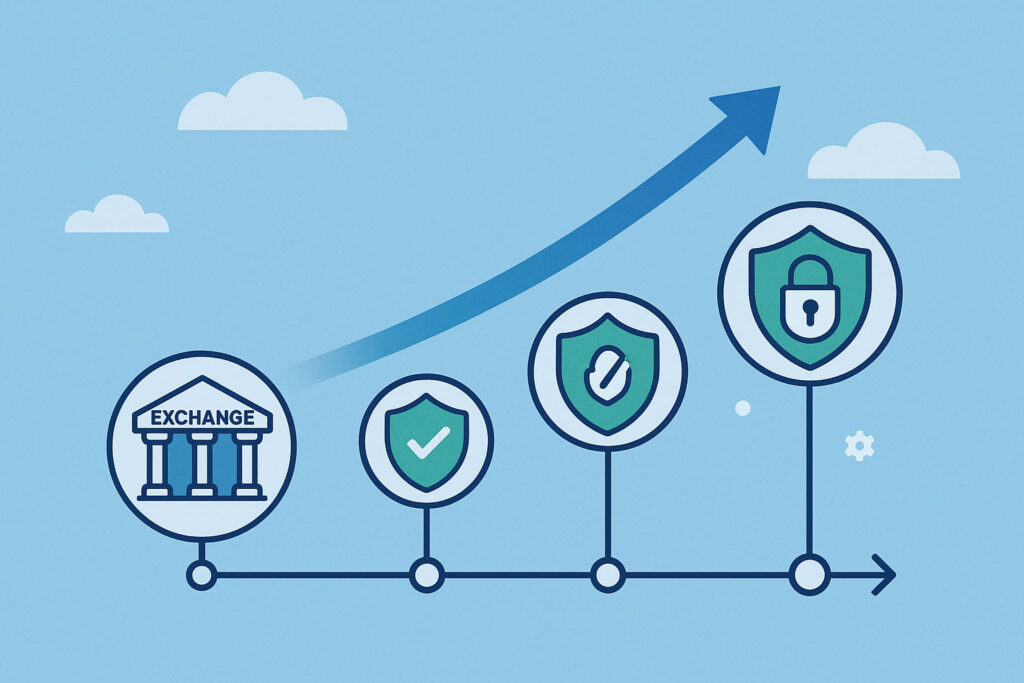
In real life, your goal is not to find a mythical zero risk platform. It is to match exchange risk to use case. For example:
- High security primary exchange – For large deposits and regular trading, you want top tier scores on security, solvency signals, and regulatory oversight. Kraken generally fits this profile in our data.
- Beginner fiat on ramp – For small initial purchases and learning the ropes, you may prioritise usability and support, while still insisting on strong base security. Coinbase is often a good fit for this role.
- Perks and ecosystem exchange – For card perks or specific app features, you might allocate a smaller portion of your stack to a platform like Crypto.com, while keeping most of your holdings elsewhere.
Across all of these, the golden rule is diversification. No matter how strong an individual exchange looks, avoid keeping your entire net worth in one place. Use at least one reputable hardware wallet for long term holdings, and treat exchanges as tactical venues, not permanent vaults.
Common misconfigurations and user level pitfalls
Even on a secure exchange, user mistakes are a major source of loss. Typical errors include:
- Recycled passwords – Using the same password on your exchange as on email or social media, making credential stuffing easy.
- SMS only 2FA – Relying solely on SMS based verification, which is vulnerable to SIM swap attacks.
- No withdrawal allowlisting – Failing to lock withdrawals to known addresses, so a single compromise can send funds anywhere.
- Exposed API keys – Leaving trading keys with withdrawal rights on insecure devices or third party tools.
- Poor device hygiene – Logging into your exchange from shared computers or infected machines.
These mistakes are magnified when users chase complex yield products, copy trading schemes, or high leverage without fully understanding counterparty risk. A conservative exchange can somewhat mitigate these behaviours with sensible defaults and friction, but it cannot completely protect you from your own choices.
Short, practical security checklist
To make this actionable, here is a condensed checklist you can keep beside you when evaluating or revisiting an exchange:
- Verify the exchange’s regulatory status and the jurisdiction that governs your account.
- Check that client assets are segregated, with a meaningful cold storage share and clear key management.
- Look for transparent proof of reserves and liabilities, not just vague marketing claims.
- Enable hardware or app based 2FA on day one, and disable SMS where possible.
- Set up withdrawal allowlists and sensible withdrawal limits and cooldowns.
- Understand the platform’s approach to insurance and protection funds, and what is realistically covered.
- Analyse the total cost of trading – including spreads and non trading fees – and avoid exchanges that rely on hidden charges.
- Review the platform’s track record of incidents, disclosures, and how it handles user complaints.
- Diversify across multiple exchanges and self custody options so no single failure is fatal.

Pros and cons of centralised exchanges from a security angle
Pros
- Professional custody and operational security teams that most individual users cannot replicate on their own.
- Concentrated liquidity, making it easier to trade size without extreme slippage on major pairs.
- Regulatory oversight and formal dispute mechanisms on well licensed platforms.
- Advanced security options such as hardware backed 2FA, address allowlisting, and API permission scopes.
Cons
- Custodial model means you do not hold private keys, and you are exposed to platform solvency and governance.
- Withdrawal and account restrictions can be applied unilaterally in response to risk flags or policy changes.
- Complex yield, lending, and derivatives products can create opaque counterparty risk.
- Marketing driven growth can sometimes push exchanges into taking risks that are misaligned with long term user safety.
Star rating snapshot for security
Based on our numerical scores and security analysis, here is a simplified star rating view of the three headline exchanges discussed earlier. These are rounded from our ten point scale and reflect security posture specifically, not overall product features.
| Exchange | Security rating (out of 5) | Comment |
|---|---|---|
| Kraken | ★★★★☆ (4.9) | Very strong security culture, conservative risk management, and robust custody. |
| Coinbase | ★★★★☆ (4.8) | Highly secure, with strong regulation and infrastructure, particularly for mainstream users. |
| Crypto.com | ★★★★☆ (4.6) | Solid security combined with a broader app ecosystem and card features. |
These ratings are not a substitute for your own due diligence, but they are a useful reference point once you have run through the checklist and narrowed down your options.
When to move funds off an exchange
Knowing when to leave is as important as knowing where to start. Consider reducing exposure or moving to self custody when:
- You notice unexplained withdrawal delays or “maintenance” events that are not clearly explained.
- Regulatory warnings or investigations emerge in the exchange’s main jurisdictions.
- The platform suddenly pivots into extremely high risk products or aggressive leverage schemes.
- Transparency decreases – for example, proof of reserves updates quietly stop, or reporting becomes more vague.
If you are unsure whether what you are seeing is a minor operational hiccup or the start of a deeper issue, it is better to reduce exposure first and ask questions later. Market history is full of cases where users stayed on platforms long after the warning signs were visible, simply because moving felt inconvenient.
Final thoughts
Exchange security is not a one time box you tick. It is an ongoing process of monitoring, adjusting, and rebalancing where you keep assets. A strong initial checklist helps you avoid the most obvious traps, but you still need to pay attention as conditions change.
The most resilient traders treat security as part of their core edge. They understand withdrawal risk, they are sceptical of marketing, they read incident reports, and they constantly refine which platforms they trust with which amounts. If you adopt that mindset, the odds of being caught in the next major failure drop dramatically.
Use the checklist in this article, dig deeper into comparative analysis, and always remember the core rule: never risk more on any one exchange than you can afford to see locked or lost in the worst case scenario.
Exchange security and due diligence FAQs
No. Every centralised exchange carries some combination of technical, solvency, regulatory, and governance risk. The goal is to choose platforms where those risks are smaller, more transparent, and better managed, and to limit your exposure through diversification and self custody.
For most people, the safest pattern is to keep only active trading balances on exchanges and to move long term holdings to reputable hardware wallets or other self custody solutions. Exchanges excel at liquidity and execution, not at being permanent vaults for life changing sums.
If you only do one thing, enable app or hardware based two factor authentication, and disable SMS wherever possible. Then add withdrawal allowlisting and sensible limits. These steps dramatically reduce the impact of an email or password compromise.
Read the fine print. Look for details on the insurer, covered events, limits, and claims process. Treat vague statements or purely internal protection funds with caution, and assume they may not cover all loss scenarios. Understanding what safu really covers will help calibrate your expectations.
Once you understand the general checklist, it makes sense to apply it to specific platforms. For a deeper dive into one of the strongest options, you can start with our dedicated is kraken a safe exchange analysis, then follow through to our review of Kraken exchange and our side by side comparisons of major competitors.
please consider sharing!:
More in Cryptocurrency
